Ritual Wrist Wear

Tied With a Knot Older Than the Workshop

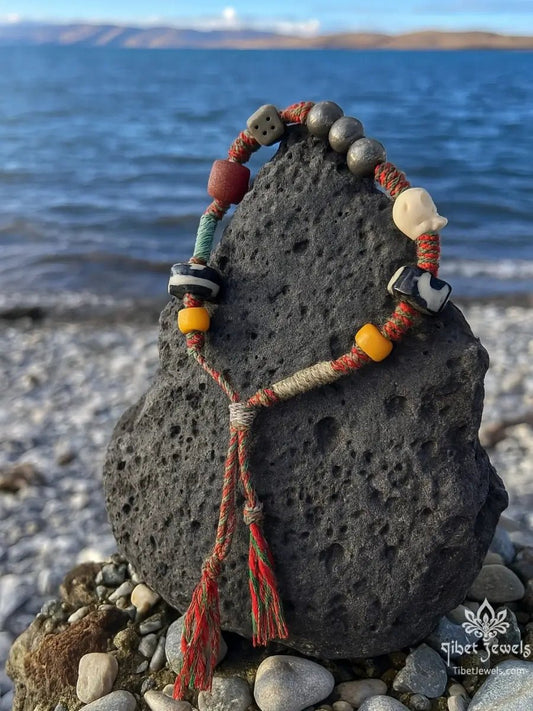
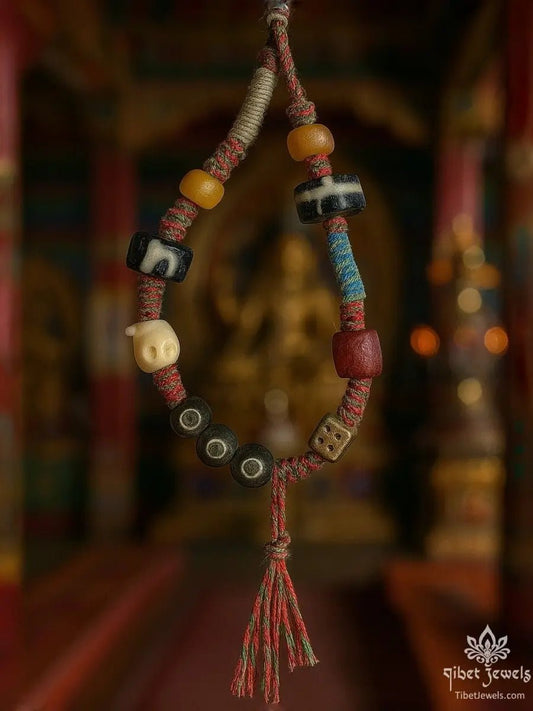
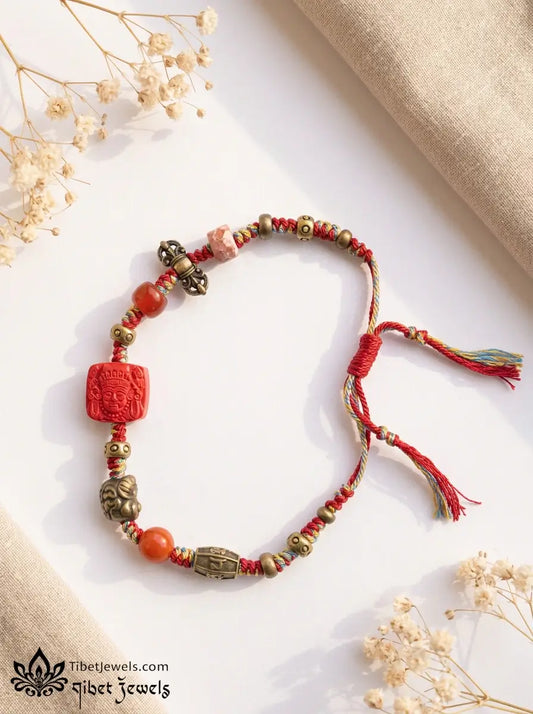
Nothing here is glued or crimped. Each cord is hand-braided and finished with the adjustable Vajra knot - the same weave Himalayan artisans have used for generations, in the elemental colours of red, green, yellow and white.

Discover more
  • Yak Bone — The Body

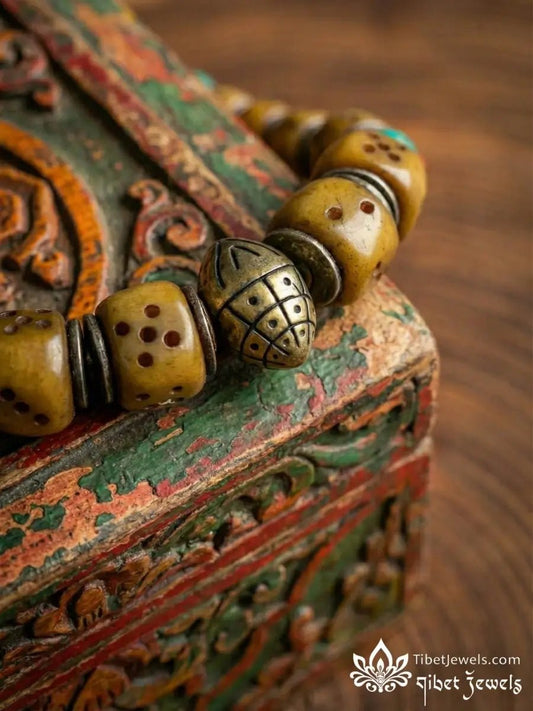
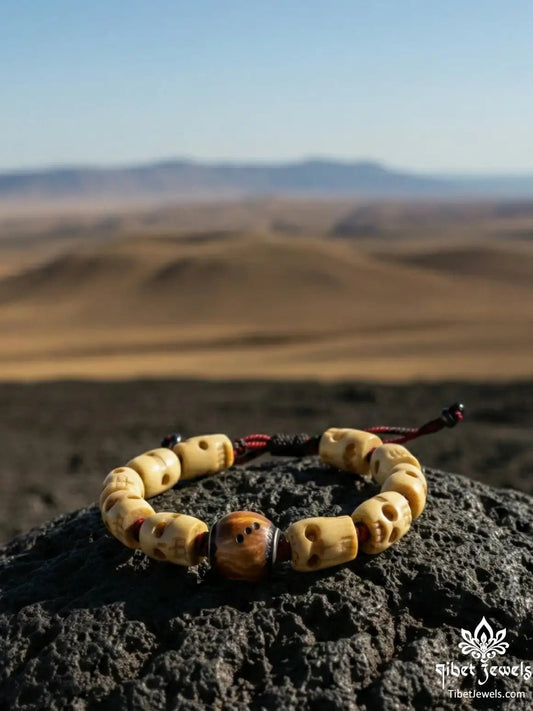
    Hand-carved in the high plateau and traditionally worn as a reminder of impermanence. It gives each piece its weight, its warmth, and eventually its patina.

  • Dzi & Old Agate — The Guard

    The Himalaya's oldest protective stones. Aged agate and Dzi-patterned beads are believed to steady the wearer and turn away what is aimed at them.

  • Temple Brass — The Voice

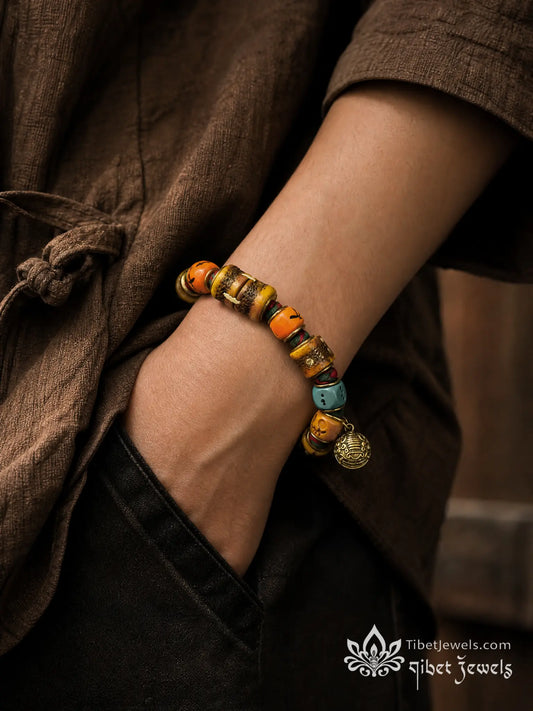
    Hand-cast counters, bells and Nyingchacha ritual beads carry the sound of the monastery. Their chime is said to wake stagnant energy and move it along.

  • Turquoise — The Sky

    The traveller's stone, carried across the Himalaya for centuries as protection on the road and a symbol of healing sky-energy.

Stories It Carries

We asked what they were carrying when they tied it on.

Before You Tie It On

Will it fit my wrist?

Most pieces are finished with an adjustable Vajra-knot cord that slides to fit roughly 17–21 cm (6.7–8.3 in); a few of the fuller malas are fixed at 24 cm (9.5 in). The exact range is on every product page. If you are between sizes, the knot will hold.

Is the yak bone real — and is it ethical?

Yes to both. Yak bone is a by-product of Himalayan herding life, the way leather is elsewhere. No animal is raised or taken for jewelry. The carving is done by hand in a Tibetan master workshop

Which wrist should I wear it on?

Tibetan tradition tends to place receiving on the left and giving on the right, and many wearers keep a protective amulet on the left. There is no wrong answer — wear it where you will notice it.

Will it change over time?

It should. Skin oils warm the bone, and brass oxidises into a deeper, quieter tone. That patina is not wear and tear. It is the record.

How do I care for it?

Keep it out of long soaks, showers and harsh cleaners, and wipe it with a dry cloth. Then let the darkening happen — it is meant to.

Shipping & returns

About Tibetan Bracelets & Wrist Malas

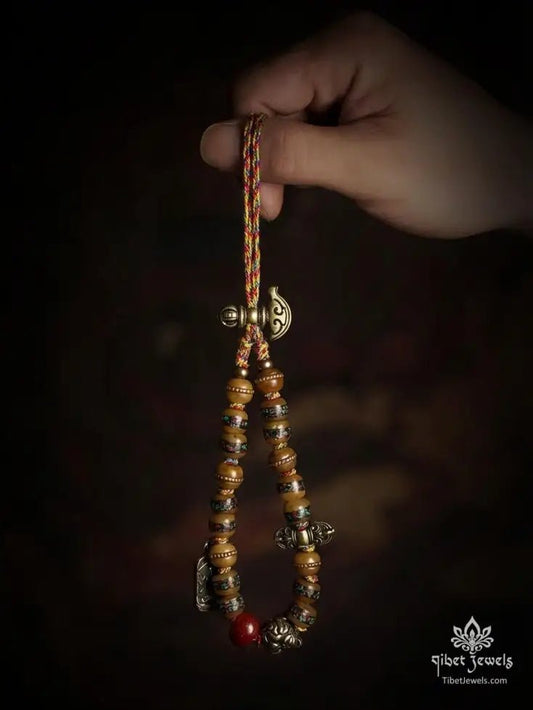
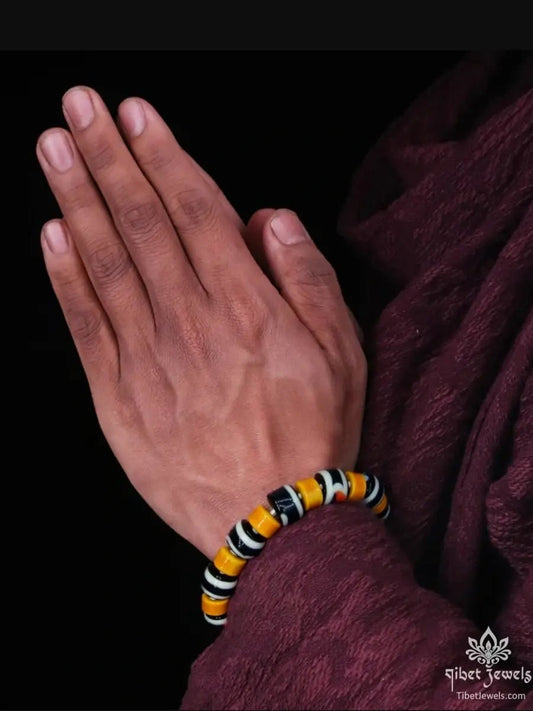
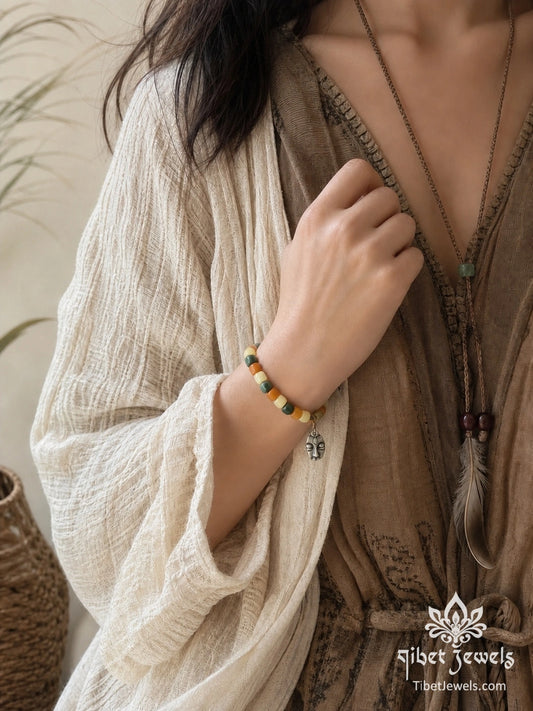
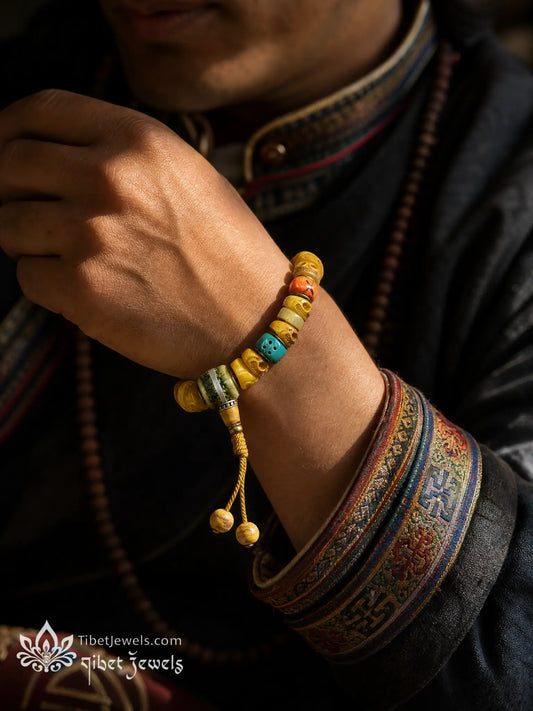
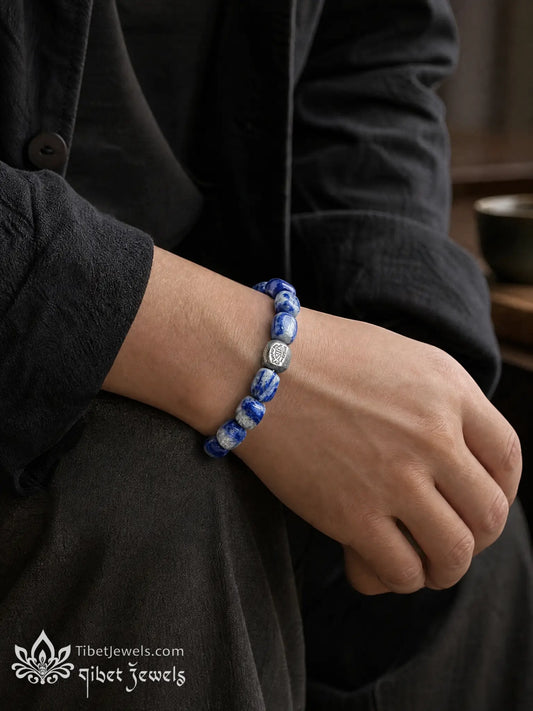
A Tibetan bracelet — or wrist mala — is a shortened prayer strand meant to be worn rather than stored. Where a 108-bead mala is a tool for counting mantra, the wrist mala is its everyday form: close enough to touch when you need it, small enough to forget you have it on. Every piece in this collection is built from the four materials Himalayan workshops have always used — hand-carved yak bone, old agate and Dzi, cast temple brass, and turquoise — strung on hand-braided Vajra-knot cord. Each one is finished by hand, so slight variation in bead size and colour is part of the object rather than a flaw in it.